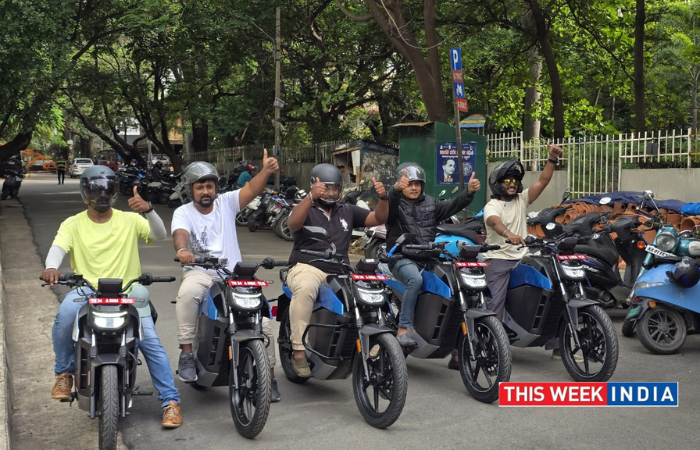
The Karnataka State Federation of Private Transport Associations today has respectfully urged the State Government to file a Special Leave Petition (SLP) before the Hon’ble Supreme Court against the judgment passed by the Hon’ble High Court in W.P. No. 906/2025, which is favourable to the operation of bike taxis.
According to the Federation, the said judgment has serious implications on legal interpretation, public safety, transport regulation, and the policy-making powers of the Government. If this judgment becomes final, it may create confusion in the State’s transport system and pose a serious threat to public safety and human life.
As per the Motor Vehicles Act, a “Motor Cab” is defined as a vehicle designed for safe commercial transport of passengers. However, treating motorcycles as “motor cabs” merely because they can carry a pillion rider is contrary to the legislative intent. Motorcycles do not have protective enclosures, safety mechanisms, or adequate structural safeguards. In case of accidents, the risk of serious injury or death is significantly higher.
No provision for Bike Taxis under the Motor Vehicles Act
There is no separate category or legal provision permitting “bike taxis” either under the Motor Vehicles Act, 1988 or under the rules framed thereunder. The Act contemplates passenger transport only through vehicles that are specifically designed and constructed for safe commercial use. Motorcycles were never considered by the legislature as contract carriages or motor cabs. Therefore, allowing bike taxis without a clear legal framework is beyond the scope of the law.
The Central Motor Vehicle Rules classify two-wheelers and passenger vehicles under separate categories, which clearly reflects the legislative intent. Ignoring this distinction weakens the very legal framework governing transport regulation.
Accident statistics and safety risks
As per opinions of doctors from NIMHANS and statistics published on the official website of the Police Department, two-wheelers account for the highest share of road accidents. Around 70% to 85% of total road accidents involve two-wheelers. Due to the lack of protective systems, injuries are often severe and fatal. This clearly establishes that motorcycles are unsafe for commercial passenger transport.
Lack of protection for accident victims
In several reported cases involving bike taxis, passengers have suffered serious injuries. In many such cases, aggregator companies failed to provide any assistance or compensation. Moreover, passengers were not covered by proper insurance. This leaves the public completely unprotected and defeats the very purpose of a regulated and insured public transport system.
Transport licence is not a fundamental right
The Hon’ble Supreme Court in Mithilesh Garg v. Union of India (1992) 1 SCC 168 and in Jai Prakash Transport case has clearly held that obtaining a transport permit is not a fundamental right. It is only a statutory privilege. The State Government has full authority to regulate, restrict, or even deny permits in public interest. Hence, denial of permission for bike taxis cannot be termed unconstitutional.
Government’s policy-making power under Section 67
Section 67 of the Motor Vehicles Act grants wide powers to the State Government to regulate, restrict, modify, or control transport services. This includes the authority to restrict certain categories of vehicles in the interest of public safety and convenience. In BALCO Employees Union (2002) and Narmada Bachao Andolan (2000), the Supreme Court held that courts should not interfere in policy matters. Therefore, whether to permit bike taxis or not falls entirely within the administrative domain of the Government.
Primary objective of the Act: Public Safety
The primary objective of the Motor Vehicles Act is public safety. Sections 56 (Fitness), 84 (Permit conditions), and 110 (Safety standards) emphasize structural safety of vehicles. Motorcycles lack enclosures, side protection, seat belts, or crash safety mechanisms. As per NIMHANS and Police data, nearly 70% to 85% of road accidents involve two-wheelers. Using such vehicles for commercial passenger transport poses a direct threat to public life.
Transport planning, regulation, and permit systems are integral parts of governmental authority, considering road safety, traffic congestion, urban planning, and enforcement feasibility. Judicial interference in such policy matters violates the principle of separation of powers.
The Federation reiterated that obtaining a permit is not a fundamental right but only a regulated administrative facility. Therefore, treating denial of permits as a violation of fundamental rights is contrary to established legal principles.
Allowing bike taxis would lead to:
Serious risk to public safety,
Increase in accident rates,
Threat to passenger lives,
Adverse impact on the livelihood of auto, taxi, and bus drivers who follow regulations,
Practical impossibility of regulation and enforcement.
In this background, the Karnataka State Federation of Private Transport Associations has urged the State Government to take immediate steps to:
Obtain legal opinion from the Hon’ble Advocate General,
File a Special Leave Petition before the Supreme Court,
Seek interim stay on the High Court judgment,
Protect State transport policy and public safety.
The Federation emphasized that protecting public safety and maintaining a regulated transport system is the primary responsibility of the Government and assured its full cooperation.
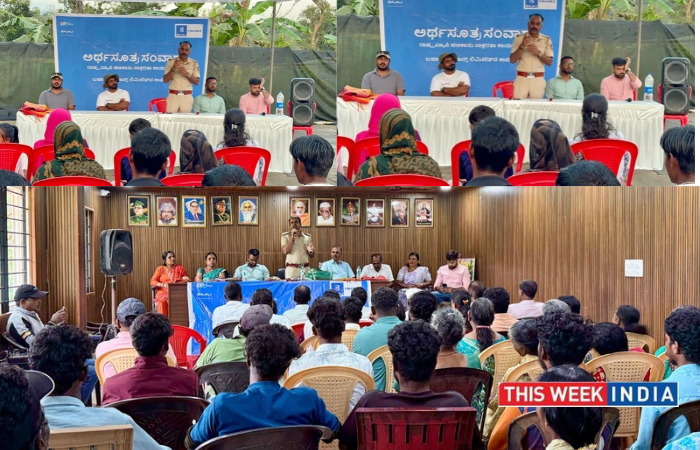
The press conference was attended by President Nataraj Sharma, Gandasi Sadananda Swamy, Snehajeevi Santosh, Ravi Kumar, Shabarinath, Pratima, Tajuddin, Raju Kannadiga, and many other leaders and drivers.