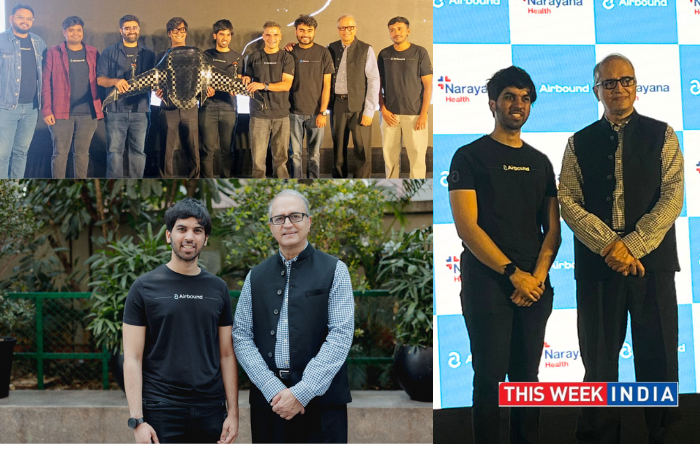
BENGALURU, March 17, 2026 — Narayana Health, a global leader in affordable healthcare, and Airbound, a Bengaluru-based aerial logistics pioneer, today announced the successful completion of a landmark medical drone pilot. The initiative, which connected Narayana Health’s Chandapura Clinic to its central laboratory at Narayana Health City in Electronic City, marks a definitive shift in how diagnostic networks can overcome urban congestion to improve patient outcomes.
A New Standard in Speed and Reliability
Since its inception in January 2026, the 4 km aerial corridor has operated with clinical precision. Over 54 consecutive days, the pilot completed more than 700 flights with zero failures. This high-frequency model allows for up to 20 flights per day, each capable of carrying up to 40 diagnostic samples.
The impact on turnaround times has been transformative. What was once a road-bound process subject to Bengaluru’s unpredictable traffic is now a consistent 10-minute flight. Within just three weeks of operation, the efficiency of the aerial route allowed Narayana Health to entirely decommission its road transfer model for this link. By moving from a “batch” system—where samples were moved only 3 to 4 times daily—to an “on-demand” aerial model, the central laboratory now receives a continuous flow of samples, allowing processing to begin immediately upon arrival.
Dr. Devi Prasad Shetty, Founder and Chairman of Narayana Health, emphasized that this technological leap is central to the mission of reducing healthcare costs.
“Technology is the primary catalyst for making healthcare accessible,” Dr. Shetty stated. “For 25 years, we have worked to centralize essential services like clinical laboratories and blood banks to lower costs. Historically, however, the twin obstacles of transportation time and logistical expenses have hindered this transition. By partnering with Airbound, we are effectively removing these barriers. We have seen firsthand the amazing outcomes that high-speed, low-cost aerial logistics can provide.”
Naman Pushp, Founder and CEO of Airbound, highlighted the significance of operating in a live medical environment. “This pilot demonstrated that frequent, predictable aerial logistics is not a future concept; it is running right now in one of India’s busiest cities. Our ambition is to build a new layer of infrastructure for commercial freight. When that change comes, distance stops being a barrier to opportunity.”
Engineering for the Urban Landscape
The success of the program is rooted in Airbound’s proprietary drone technology. The aircraft features a blended-wing-body tailsitter design, which combines the vertical takeoff capabilities of a helicopter with the aerodynamic efficiency of a fixed-wing plane. This allows the drones to navigate dense urban environments at a lower cost-per-kilometer than conventional ground transport, making repeatable, high-frequency operations commercially viable.
The Road Ahead: Banashankari and Beyond
The partnership is now moving into an aggressive expansion phase titled “Banashankari and Beyond.” Following the success in Electronic City, the partners are preparing to scale services at the upcoming Narayana Health hospital in Banashankari. Pending final regulatory clearances, a new corridor will be established to link the Banashankari facility directly to the flagship hospital in Electronic City.
The long-term vision extends far beyond a single network. Airbound and Narayana Health plan to:
- Open the Network: Invite smaller private hospitals and peripheral clinics outside the Narayana Health ecosystem to utilize the aerial corridor.
- Scale Nationally: Following the Bengaluru expansion, the partners have identified Kolkata as the next major focus region for medical drone logistics.
- Blood Logistics: Expand the cargo scope to include life-saving blood bags and emergency medical interventions.
A Game Changer for Patient Care
By enabling peripheral clinics to send samples rapidly to high-volume, centralized hubs, hospital networks can expand their reach without the massive capital expenditure of building full diagnostic infrastructure at every location. This “hub-and-spoke” aerial model reduces congestion at major hospital campuses and ensures that a patient’s location does not dictate the speed of their diagnosis.
“The standardization of drone transport will be a true game-changer,” Dr. Shetty concluded. “We extend our gratitude to the Government for a supportive regulatory framework that encourages such vital innovation.”