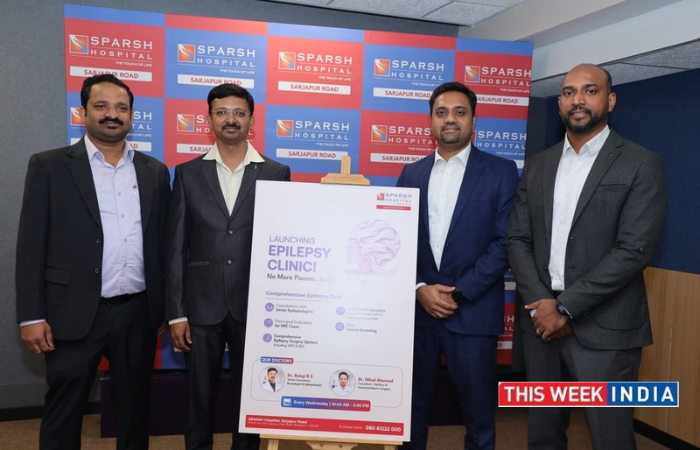
Bengaluru, November 16, 2026: SPARSH Hospital, Sarjapur Road, has inaugurated a dedicated Epilepsy Clinic designed to expand access to specialized diagnosis, advanced treatment, and long-term management for individuals living with seizure disorders. Operating every Wednesday at the Sarjapur Road facility, the clinic brings together a multidisciplinary medical team to deliver coordinated care, with a particular focus on complex and drug-resistant epilepsy.
Globally, epilepsy affects around 50 million people, with nearly 80% residing in developing nations. India alone is home to an estimated 12 million individuals with epilepsy—roughly one-fifth of the world’s total—including 2 to 3 million people whose seizures do not respond to standard medications. Despite its prevalence, widespread misconceptions frequently result in delayed diagnoses, suboptimal care, and social stigma. Medical specialists emphasize that epilepsy encompasses a broad spectrum of neurological disorders with varied causes and seizure patterns, requiring tailored treatment approaches rather than a one-size-fits-all solution.
At the new clinic, patients receive thorough clinical evaluations and precise seizure classification led by an experienced epileptologist. Diagnostic capabilities include routine scalp Electroencephalography (EEG), continuous video EEG monitoring, dedicated epilepsy-protocol brain MRI, functional MRI, brain PET scans, and specialized neuroradiological reviews. In addition, patients can undergo neuropsychological testing and consultations with functional neurosurgeons to map out personalized treatment plans.
For individuals needing advanced care beyond medication, the center provides complete presurgical workups, epilepsy surgery, neuromodulation therapies, and targeted neurorehabilitation. Intraoperative neurophysiological monitoring—utilizing electrocorticography, cortical mapping, and somatosensory and motor evoked potentials—further enhances surgical safety and precision when intervention is required.
“Epilepsy is not a single condition; it involves diverse underlying causes, seizure types, and therapeutic pathways,” said Dr. Balaji B S, Senior Consultant – Neurologist & Epileptologist at SPARSH Hospital, Sarjapur Road. “Effective management requires looking beyond standard anti-seizure prescriptions. Accurate diagnosis, specialized testing, and early identification of candidates for advanced interventions are critical. Through this clinic, we aim to deliver individualized, multidisciplinary care while empowering patients and families with the knowledge needed to overcome stigma and improve daily living.”
Dr. Nihal Ahemad, Consultant – Epilepsy & Functional Neuro-Surgeon at SPARSH Hospital, Sarjapur Road, added, “For people battling drug-resistant epilepsy, surgery should not be viewed as a final fallback—it is a transformative path toward seizure freedom. When seizures persist after two appropriate medication trials, postponing a surgical evaluation can harm cognitive function and quality of life. Today’s epilepsy surgery achieves remarkable accuracy, allowing our team to map vital brain networks and control seizures while safeguarding critical neurological functions.”
The clinic serves patients across all life stages, including infants, children, adolescents, adults experiencing new or recurring seizures, pregnant women needing specialized care, and individuals with uncontrolled epilepsy. By uniting diagnostics, surgical expertise, and rehabilitation under one roof, SPARSH Hospital aims to strengthen continuity of care and long-term patient outcomes.