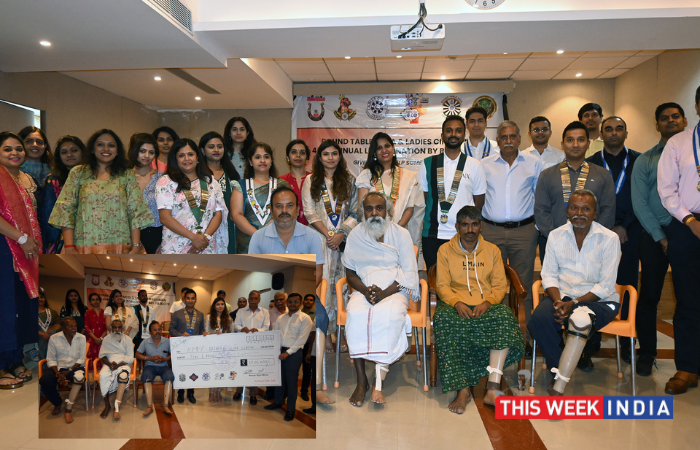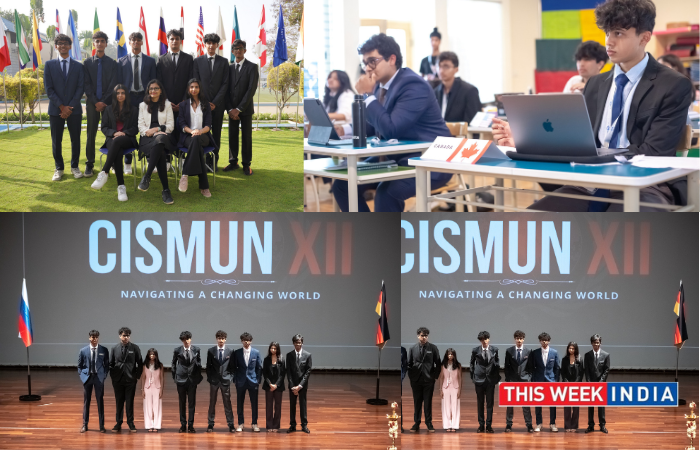
Bangalore, March 11, 2026 – The Canadian International School Model United Nations (CISMUN XII) recently concluded a successful edition of MUN with over 380 delegates from 29 schools across India – making it one of the largest MUN conferences in CIS history. The conference theme, “Navigating a Changing World’, reflects the uncertainty felt by today’s youth with the rise of artificial intelligence, drug addictions within the youth, and frequent militarizations in regions across the world.
Across 12 committees, delegates engaged in substantive debate on 23 agendas, addressing urgent global challenges including nuclear energy, environmental degradation, human exploitation, armed conflict, and geopolitical instability. Specialised bodies such as the United Nations Human Rights Council, United Nations Educational, Scientific and Cultural Organization, and the United Nations Office on Drugs and Crime examined contemporary conflicts and transnational issues, culminating in the passage of over 20 resolutions. The MUN was conducted in strict adherence to The Hague International Model United Nations (THIMUN) procedure, reflecting a strong commitment to internationally benchmarked standards of debate and diplomacy.
Some of the schools include Mallya Aditi International School, Neev Academy, and American International School, Chennai, Sharanya Narayani International School (SNIS), Vidyashilp Academy, The Indian Public School (TIPS), Delhi Public School (DPS), and National Public School (NPS). The conference was honoured by the presence of Shankar Manoharan, a senior officer of the Indian Defence Accounts Service and the current Principal Controller of Defence Accounts, Bengaluru. In his address, he highlighted the urgency of structural reform in global governance, noting that “Breakdown in global governance architecture and its multilateral bodies cannot be fixed by mere reforms. It needs to be rebuilt from the ground up with newer institutions, which are fairer, inclusive, and sustainable.”
After three days of fruitful debate and cut-throat speeches, the conference came to an end. All 12 committees set a precedent for what youth diplomacy can achieve by creating a blueprint rooted in equity, innovation, and collective responsibility. The excitement and enthusiasm of the event was supported by the hard work, dedication, and continuous support of countless faculty and staff members. The school’s transportation, logistics, and cafeteria facilities ensured that the conference was well-organized.
“At CIS, we view Model United Nations not merely as a conference, but as a catalyst for intellectual and personal growth. CISMUN challenges students to interrogate complex global issues, negotiate across differences, and craft solutions grounded in research and empathy. It reflects our enduring commitment to cultivating principled leaders, individuals equipped with the critical thinking, diplomatic acumen, and moral courage required to shape a more just and interconnected world.” shared Ms. Shweta Sastri, Managing Director, Canadian International School Bangalore.
With this chapter closed, the next generation of Secretariat members now takes on the challenge of carrying forward CISMUN’s legacy, ensuring that next year’s conference continues to inspire, innovate, and shape the leaders of tomorrow.