BENGALURU, September 18, 2025. Alliance University and the Indian Institute of Science (IISc) in Bengaluru are co-hosting a two-day national workshop on Hydrogen Fuel Technologies and Future Trends from September 19–20, 2025. The event, organized in partnership with The Combustion Institute – Indian Section (CIIS), will bring together experts, policymakers, and academics to discuss India’s push toward a hydrogen-powered economy.
The workshop will focus on the use of hydrogen in everything from cars and planes to rockets and gas turbine engines. It will also cover related topics like hydrogen integration, safety procedures, and the role of AI and machine learning in designing hydrogen engines.
The inaugural session will feature several prominent figures, including Dr. V. Narayanan, Chairman of ISRO, and Dr. Vijay Kumar Saraswat, Hon’ble Member of NITI Aayog, who will give the keynote address on “India’s Hydrogen Policy and Future Trends.”
Key Takeaways from the Workshop Announcement
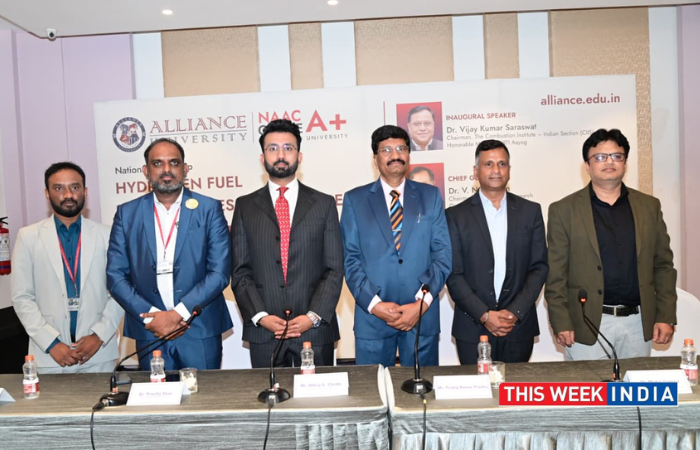
During a press conference, several speakers highlighted the key opportunities and challenges related to hydrogen energy:
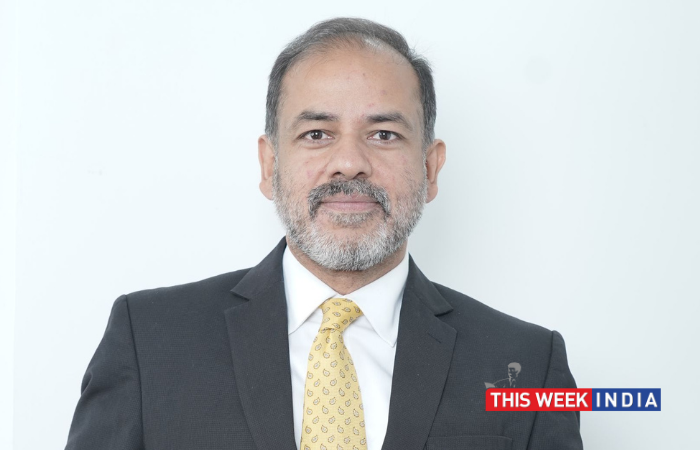
Mr. Pradip Kumar Pandey of CIIS noted that while green hydrogen currently costs twice as much as conventional hydrogen, the goal is to drive the global cost down from $10 to $1 per kilogram through collaboration among researchers, institutions, and industry. He also mentioned that Alliance University is working on a model project to implement hydrogen-based solutions in a local village.
Mr. Abhay G. Chebbi, Pro Chancellor of Alliance University, emphasized that technology, not policy, is the main hurdle for India’s clean energy transition. He stressed the need for stronger partnerships between academia, industry, and government to turn scientific advancements into real-world applications.
Dr. Priestly B. Shan, Vice Chancellor of Alliance University, highlighted the job-creation potential of the hydrogen sector, citing the National Green Hydrogen Mission’s estimate of 600,000 new jobs by 2030. He also suggested creating “hydrogen hubs” to integrate local skill development directly into the hydrogen ecosystem.
The workshop aims to be a crucial platform for dialogue and collaboration, helping to shape a national agenda for sustainable energy and positioning India as a global leader in the hydrogen economy.