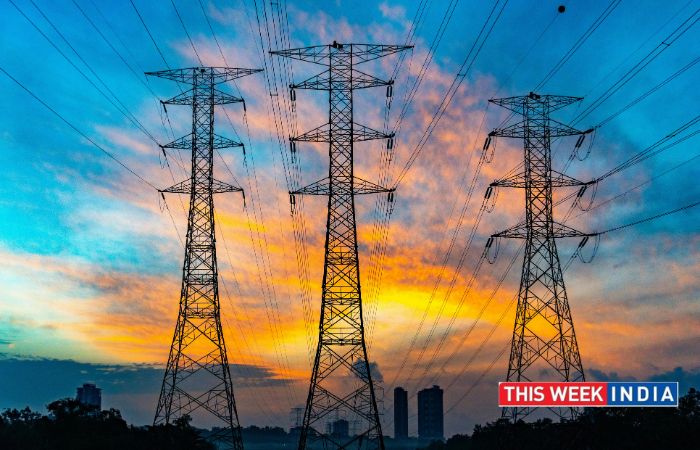
Bengaluru: Karnataka is heading for one of the steepest electricity demand surges in the country, with peak requirement set to nearly double by 2034–35. According to the Central Electricity Authority’s latest Resource Adequacy Plan, the state’s peak demand is projected to rise from 18,395 MW in 2024–25 to 35,218 MW by 2034–35, while annual energy consumption is expected to jump from 92,648 MU to 189,667 MU over the same period.
Officials and industry experts say the numbers reflect rapid urbanisation, a boom in data centres, rising cooling loads due to hotter summers and growing electrification of transport and industry. But alongside the demand surge, another challenge is becoming harder to ignore: Karnataka’s transmission infrastructure is not expanding at the pace required to move the power that is being planned and built.
The report also warns that without timely capacity additions, the state could face 19,586 MU of unserved energy by 2034–35, largely during evening and early-morning non-solar periods. But much of this gap, experts argue, is preventable with better transmission planning.
Industry expert Saddaf Alam, who involved in multiple renewable projects across south India, said, “We are now in a situation where generation is being built faster than the wires to carry it. If evacuation doesn’t keep up, Karnataka will end up with stranded power, plants that produce electricity that simply can’t be delivered.”
“Karnataka’s renewable-rich zones in the north and south need high-capacity corridors now, not five years from now. Otherwise, developers will end up building capacity that sits idle every afternoon,” he further added.
Multiple developers echo the same concern. Evacuation lines, substations and inter-state links often lag 18–36 months behind generation projects, delaying commissioning and raising project costs.
Energy analysts emphasise that strengthening Karnataka’s transmission backbone is not just a technical challenge but a policy imperative. “If Karnataka wants reliable, round-the-clock power—especially from renewables—the grid has to be the priority now. Without robust transmission, the state risks outages in some months and wasted electricity in others,” said an independent power systems researcher.
As Karnataka races toward a high-electricity future, experts warn that the success of its clean-energy ambitions may ultimately depend on a less-visible part of the system: the wires that tie everything together.