Bengaluru, August 10, 2026: In a dramatic race against time, medical specialists at SPARSH Hospital, Sarjapur Road, successfully saved the life of a 16-year-old boy brought to the intensive care unit in a near brain-dead state caused by a rare, unseen “occult” neurotoxic snakebite.
The teenager arrived in critical condition, completely unresponsive with a Glasgow Coma Scale (GCS) score of 3/15—the lowest possible score. He presented with fixed and dilated pupils, absent brainstem reflexes, complete paralysis, and total respiratory failure, surviving solely on ventilator support.
According to his family, the crisis began the previous evening with severe abdominal pain and vomiting following dinner, followed by a rapid neurological decline. Because the boy exhibited no visible swelling, bleeding, or localized pain typical of a bite, initial evaluations pointed toward severe food poisoning, botulism, or acute neurological syndromes. Repeated brain scans, abdominal CTs, and standard toxicology panels showed no abnormalities, leaving his family in agonizing uncertainty.
The turning point came when the critical care team at SPARSH Hospital re-examined the sequence of events. Learning that the boy had slept on his home porch the previous night, doctors conducted a painstaking, inch-by-inch physical search of his body. Near the base of his right little toe, they uncovered two faint punctate marks—the hidden signature of a neurotoxic snakebite, often inflicted silently during sleep by nocturnal species like the Common Krait.
Without delay, the team initiated targeted Polyvalent Anti-Snake Venom (ASV) therapy combined with advanced neuro-critical care. Within hours, the teenager slowly regained eye movements, facial expressions, limb reflexes, and independent breathing.
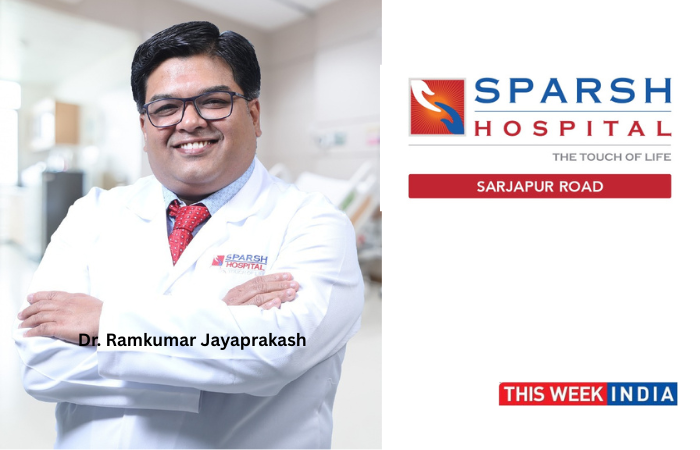
“When a young patient arrives with absent brainstem reflexes and complete quadriplegia, every second counts. Occult krait bites are notoriously deceptive because they are virtually painless and present initially as severe stomach pain, masking the underlying neurotoxicity,” said Dr. Ramkumar Jayaprakash, HOD and Lead Consultant – Critical Care Medicine, SPARSH Hospital, Sarjapur Road. “Spotting those faint fang marks allowed us to act decisively. Seeing him transition from a state mimicking brain death to breathing on his own and walking again within a week is a testament to early clinical vigilance and rapid critical care intervention.”
Following successful extubation and structured neurorehabilitation, the teenager made a full functional recovery and was discharged home just one week after ICU admission.
“Saving this young life reflects the seamless coordination of our clinical, emergency, and critical care units,” said Raghuram M D, Chief Operating Officer, SPARSH Hospital, Sarjapur Road. “This case reinforces our commitment to providing rapid, precision-driven tertiary care when minutes determine survival.”
This case serves as a vital public health reminder: sudden central abdominal pain followed by rapidly advancing muscle weakness—especially in individuals sleeping on the floor or outdoors—must be evaluated urgently for neurotoxic envenomation, even if no bite or snake was witnessed.