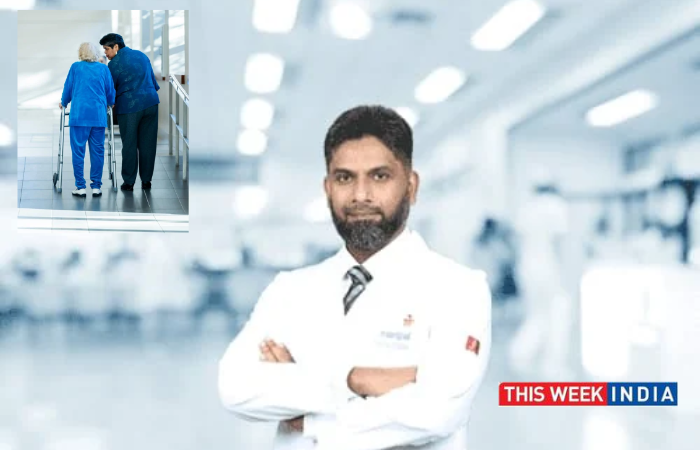
By – Dr Maqsood Ahmed A R, Senior Consultant – Neurosurgery and Neuroendovascular Surgery), Manipal Hospital Mysuru)
Stroke is often perceived as a health crisis affecting the elderly. Rarely do people associate it with adults in their mid-30s or early-40s. However, available medical data across Indian hospitals contradicts this perception. In fact, recent studies on stroke reveal that young adults accounted for nearly 16.7 percent of all stroke patients, a deeply concerning statistic as individuals in their 30s or 40s. The root cause increasingly pointing towards a mix of genetics and everyday lifestyle choices.
Among the risk factors, high blood pressure tops the list, closely followed by abnormal cholesterol or dyslipidaemia. The combination of the two in any individual would only mean heightened danger. Adding to this danger, is the concerning fact that many young people do not regularly check their numbers, which may lead to hypertension going undetected for years. Add a family history of heart disease or stroke, and the risk climbs even higher.
Diabetes is the third major risk factor, alongside smoking and chewing tobacco. The condition causes gradual damage to blood vessels over time, and smoking and chewing tobacco narrow the arteries. Add to it lifestyle factors such as chronic stress, poor sleep, long desk hours, and minimal exercise, and your body ends up taking a heavy toll. Researchers link the global rise in strokes among young adults directly to these growing daily habits.
When the heart is the source
Sometimes a stroke is actually created in the heart and a clot travels directly to the brain. A big one: rheumatic heart disease, which is shockingly common in India. Another is a patent foramen ovale (PFO), a small hole in the wall between the upper chambers of the heart, which can let a rogue clot slip through.
Undisclosed and Uncommon Triggers
Tears in the neck artery (dissections) caused by a sudden neck jerk, trauma, or injury.
Blood clotting disorders causing blood to clot easily.
A specific type of clot in the brain’s veins called Cerebral Venous Thrombosis (CVT) one of the leading causes of stroke in young Indians.
Tuberculous meningitis infection causing swelling in the brain’s vital blood vessels.
Certain systemic triggers such as severe migraines, and hormonal changes related to oral contraceptive use, pregnancy and the postpartum period, as well as recreational drug use.
What young adults can do
Don’t wait for a wake-up call. Get your blood pressure, blood sugar, and cholesterol checked once a year, even if you feel completely healthy. Ditch tobacco, keep your body moving, and take any prescribed medications consistently.
Above all, never dismiss sudden symptoms assuming you’re “too young” for a stroke.
Remember BE FAST – Sudden loss of balance(B), Eye symptoms like double vision or blurred vision(E), a drooping face(F), weak arm(A), slurred speech(S), needs a urgent (T time) hospital with brain imaging facilities, A STROKE READY HOSPITAL. Recognise BE FAST AND ACT FAST. Call 108 and note the time symptoms began.
If you spot these signs, rush to a stroke-ready hospital without a delay. Note the exact time symptoms started and call emergency services (108) immediately. Youth might feel like a shield, but age offers no real immunity here. Early check-ups and fast action are what truly save lives.